Most basements do not flood out of nowhere. Long before there is standing water, the walls, floor, and air give off clues that water is getting in or building up behind the foundation. Catching those clues early is the difference between a targeted repair and tearing out a finished room.
Here are the nine signs we look for first when we inspect a basement in DC and Maryland, what each one usually means, and how urgent it is.
1. A musty smell that never goes away
A persistent earthy or musty odor means humidity is high enough for mold and mildew to grow, even if you cannot see it. In older rowhomes and colonials, the source is often moisture wicking through the foundation walls or a crawlspace that shares air with the basement.
2. White, chalky deposits on the walls
That powdery white residue is efflorescence: mineral salts left behind when water passes through masonry and evaporates. It is harmless to touch, but it is proof that water is moving through the wall. Wiping it off does not fix anything; it will be back after the next wet week.
3. Water lines or stains at the base of the walls
A dark band a few inches up the wall, or tide-mark stains on stored boxes, shows where water has collected and dried. Water entering where the wall meets the floor (the cove joint) is the classic sign of hydrostatic pressure pushing groundwater under the footing.
4. Peeling paint or bubbling waterproof coatings
Paint and sealers fail from behind when moisture pushes through the wall. If a coating is blistering or flaking, it is telling you that a surface product cannot hold back what is coming from the soil side.
5. Damp spots after rain that dry within a day or two
Spots that show up only after heavy rain point to surface water: clogged gutters, short downspouts, or soil that slopes toward the house. These are often the cheapest problems to fix, which is why it pays to check the outside before assuming the worst.
6. Cracks in the floor or walls
Hairline shrinkage cracks are normal in poured concrete. Cracks that are wider than a credit card, that let water in, or that are stair-stepping through block or brick deserve a closer look. Note whether a crack is growing by marking its ends with a pencil and the date.
7. Rust on the water heater, furnace, or appliance legs
Rust at the base of equipment that sits on the slab means the floor has been wet, even if you never saw it happen. It also means the equipment is at risk, so it is worth fixing before it shortens their life.
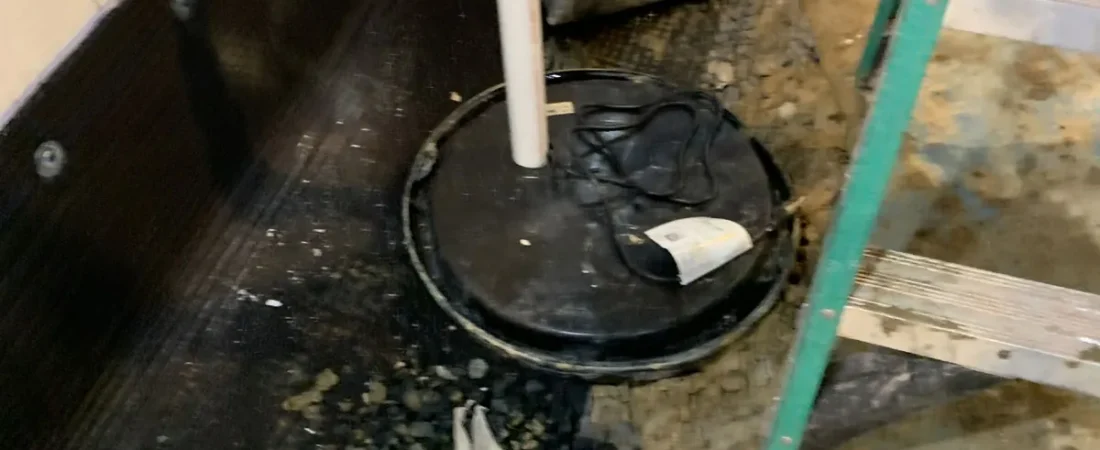
8. A sump pump that runs constantly, or never runs
A pump that cycles every few minutes in dry weather may be handling more groundwater than it was sized for, or it may have a stuck float or a failed check valve. A pump that never runs, even after storms, might not be working at all. Both deserve a test before the next big rain.
9. Warped flooring, swollen trim, or soft drywall
In finished basements, the finishes often hide the water. Cupped laminate, baseboard that has pulled away, or drywall that feels soft near the floor all mean moisture is getting behind the walls.
What to do if you see these signs
- Check gutters and downspouts first. Downspouts should discharge several feet from the foundation.
- Look at the grading. Soil should slope away from the house, not toward it.
- Run a dehumidifier and watch how much water it pulls. A full bucket every day is a signal, not a solution.
- Photograph stains and cracks with the date, so you can tell whether things are changing.
- Get a professional diagnosis before buying a fix. Sealers, interior drains, and exterior waterproofing solve different problems.
The most expensive mistake we see is paying for the wrong repair. Our leak diagnosis pins down where water is entering and why, so the fix matches the cause. If the problem is groundwater, basement waterproofing with an interior drain and sump system is usually the long-term answer. If it is surface water, grading and drainage work may be all you need.
Seeing any of these in your home? Request an inspection and a waterproofing professional will walk through it with you.