If you have walked into your basement after a summer thunderstorm and found a puddle, a damp rug, or standing water, you are in good company. Water in the basement is one of the most common problems homeowners in Washington, DC and suburban Maryland deal with, and one of the most expensive to ignore. The question we hear most often is simple: do I actually need a sump pump, or is there a cheaper fix? Here is how we answer it.
What a sump pump does and does not do
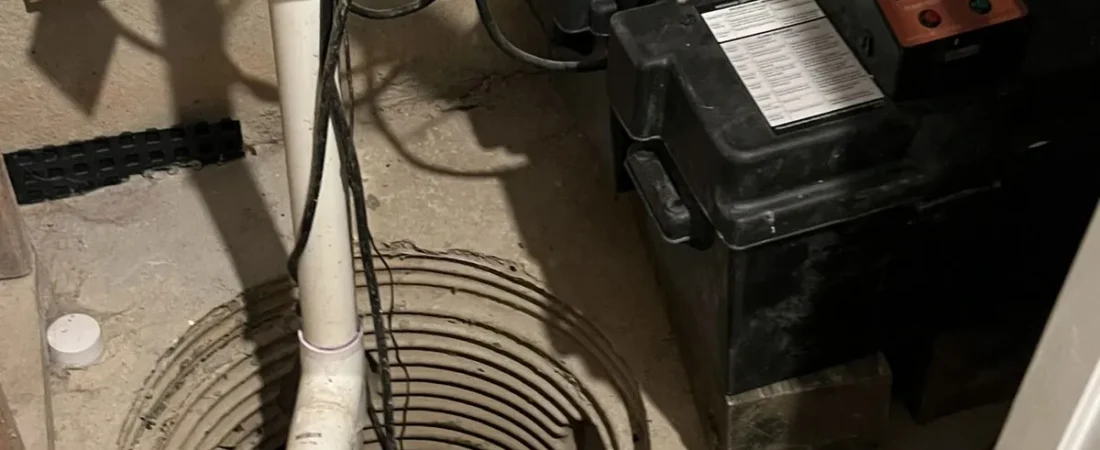
A sump pump sits in a basin cut into the lowest point of your basement or crawlspace floor. When groundwater rises into the basin, a float lifts, the pump switches on, and the water is pushed through a discharge line to a point outside, away from the foundation. When the water level drops, the pump shuts off and waits for the next storm.
What a pump does not do is collect water. It only removes what reaches the basin. If water is seeping in along the far wall and never travels to the pit, the pump will not help that wall. That is why most sump pumps in this region are installed as part of a drain system that brings the water to them.
Five signs your home needs a sump pump
1. The basement smells musty or feels damp
You do not need visible water to have a water problem. A persistent musty smell, condensation on cold pipes, or a dehumidifier bucket that fills every day all mean moisture is moving through the slab or walls. Left alone, that moisture feeds mold and ruins anything stored down there.
2. Water has come in before, even once
A basement that has flooded once will flood again under the same conditions. The soil, the slope of the lot, and the water table have not changed. If you have mopped up water even one time, a pump with a proper collection system is the only way to stop worrying every time the forecast calls for rain.
3. Your home sits low or on flat ground
Much of Prince George’s County and the lower parts of Montgomery County sit on heavy clay that drains slowly. Add a lot at the bottom of a hill, or a block with no natural slope, and rainwater has nowhere to go but down into the soil around your foundation. Hydrostatic pressure builds, and the water looks for a way in.
4. Your gutters and downspouts cannot keep up
Overflowing gutters and downspouts that end at the foundation wall dump hundreds of gallons of roof water right where you do not want it. Fixing the gutters is step one, and sometimes it is enough on its own. If water still shows up after the downspouts are extended, the problem is in the ground and a pump becomes part of the answer.
5. You are about to finish or renovate the basement
Carpet, drywall, a home office, a guest room. Nothing destroys a finished basement faster than a flood, and nothing is harder to retrofit than a drain under a finished floor. Put the drainage and the pump in before the finishes go in, not after.
When a sump pump is not the right first move
Sometimes the honest answer is that you do not need a pump yet. If water only appears after a downspout overflows, or the grade next to the house slopes toward the foundation, correcting those exterior problems may solve it. A pump in a dry basin does nothing, so we look at the exterior first and recommend the least invasive fix that will actually work.
On the other hand, if water enters along the cove joint where the wall meets the floor, or through the floor itself, no amount of exterior work will fully stop it. That water is coming up from below under pressure, and it needs a drain and a pump.
What a proper installation includes
- A basin set deep enough to collect water before it reaches the slab surface
- A cast-iron submersible pump sized for the water volume, not just the biggest motor on the shelf
- A check valve so discharged water does not fall back into the pit
- A discharge line that carries water well away from the foundation and does not freeze shut in January
- A battery backup pump if the basement is finished or the power is unreliable
- A sealed lid that keeps humidity and soil gases out of the living space
We install Zoeller, Pro-Series, ION, Flotec, and Basement Watchdog pumps, and we match the pump to the house rather than selling one model to everyone.
Get an honest answer
If you are unsure whether your home needs a sump pump, request an inspection. We walk the exterior, check the basement, find the source of the water, and explain your options and what to expect from each one. If a pump is the right call, we tell you. If it is not, we tell you that too.
And when a drain system is part of the fix, Sump Daddy is the only waterproofing company in the area that also rebuilds the finished space afterward, through SD Restorations. The job ends with a basement you can use, not one you have to hire someone else to put back together.