Exterior waterproofing is the most complete way to keep a basement dry, and it matters most in older homes. A 1920s rowhouse in Capitol Hill or a 1940s brick colonial in Silver Spring was built with a foundation that was never waterproofed in the modern sense. Interior systems manage the water after it arrives. Exterior work stops it from touching the wall at all.
Why old foundations leak
Most older homes in DC and Maryland have brick, block, or rubble stone foundations. These materials are porous, and the mortar between them is more porous still. They were often built with no footing drain, or with clay tile drains that silted up or collapsed generations ago. Many have had decades of downspout water dumped next to the wall, and the soil around them is clay that holds water against the masonry for days after each storm.
The result is a wall that absorbs water like a sponge, weeps on the inside, and slowly loses mortar and surface to the constant wetting and drying. An interior drain will collect that water and keep the floor dry, but the wall itself stays wet. Exterior waterproofing is how you protect the wall.
What the process involves
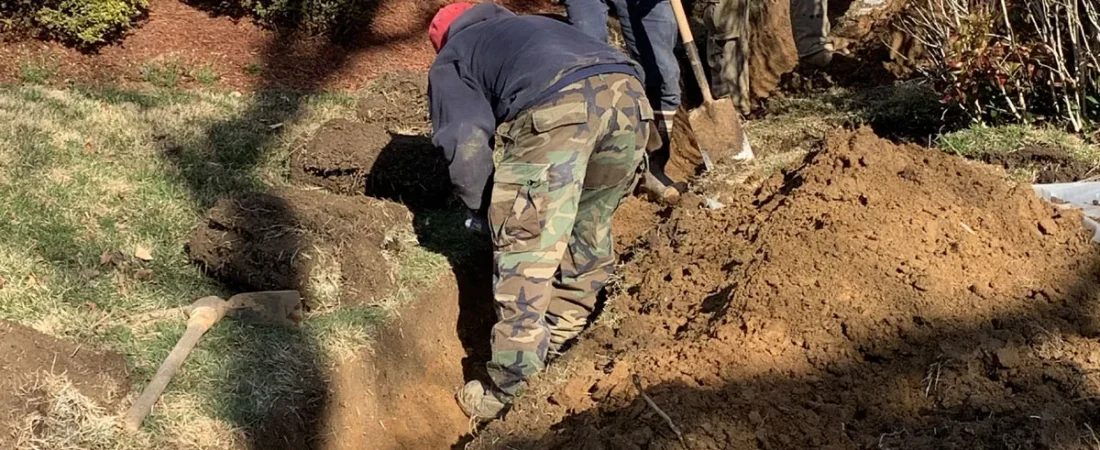
- Excavating along the foundation down to the footing, by machine where the lot allows and by hand on narrow rowhouse side yards or near utilities
- Cleaning and inspecting the exposed wall, repointing deteriorated mortar, and repairing minor cracks so the surface is sound
- Applying a waterproof membrane to the wall, from the footing to just below grade, so water cannot enter the masonry
- Installing dimple drain board over the membrane, which protects it during backfill and gives water a clear path straight down to the drain
- Setting a perforated footing drain in washed gravel at the base of the wall, sloped to a sump basin or to daylight
- Backfilling with gravel and soil, then regrading so the finished surface slopes away from the house
On the right home, the exterior drain also picks up the downspouts and any window well drains along the way, so one system handles all of the water on that side of the house.
When exterior is the right choice
- The wall itself is deteriorating: crumbling mortar, flaking brick, or heavy efflorescence on the inside face
- Water is entering high on the wall, not just at the floor joint, which points to a surface or grading problem outside
- The basement is already finished and well built, and you would rather dig outside than open the interior
- There is yard access along the wet wall and the lot is wide enough to work
- You want the longest-lasting fix and the budget allows for excavation
When interior makes more sense
Exterior waterproofing is not always possible or sensible. Rowhouses with shared party walls have no exterior to dig on two sides. Lots with a driveway, patio, mature tree, or gas line along the foundation make excavation expensive or impractical. And when water is rising through the floor under hydrostatic pressure rather than through the wall, an interior drain at the slab edge is the direct fix.
Many of our jobs combine both: exterior work on the accessible, most deteriorated wall and an interior perimeter drain for the rest. We lay out the options and the expected result of each before any digging starts, so you are choosing with full information.
What we do not do
Our crack repair is limited to minor cracks that are letting water in. If excavation reveals a wall that is bowing, shifting, or structurally failing, that is work for a structural contractor, and we will tell you so instead of covering it with a membrane.
Not a weekend project
Exterior waterproofing is serious work. It involves deep trenches next to a foundation, utility locating, and materials that have to be applied correctly to a clean, dry wall. Done right, it is the most permanent solution for a home with chronic water problems, and it protects the structure, not just the floor.
If you love your old home but not the water problems that came with it, request an inspection. We will find where the water is coming from, tell you whether the fix belongs inside or outside, and handle it the right way the first time. And when the interior does need to be opened, SD Restorations puts it back together as part of the same project.